
2026 · completed · web
Cycoders
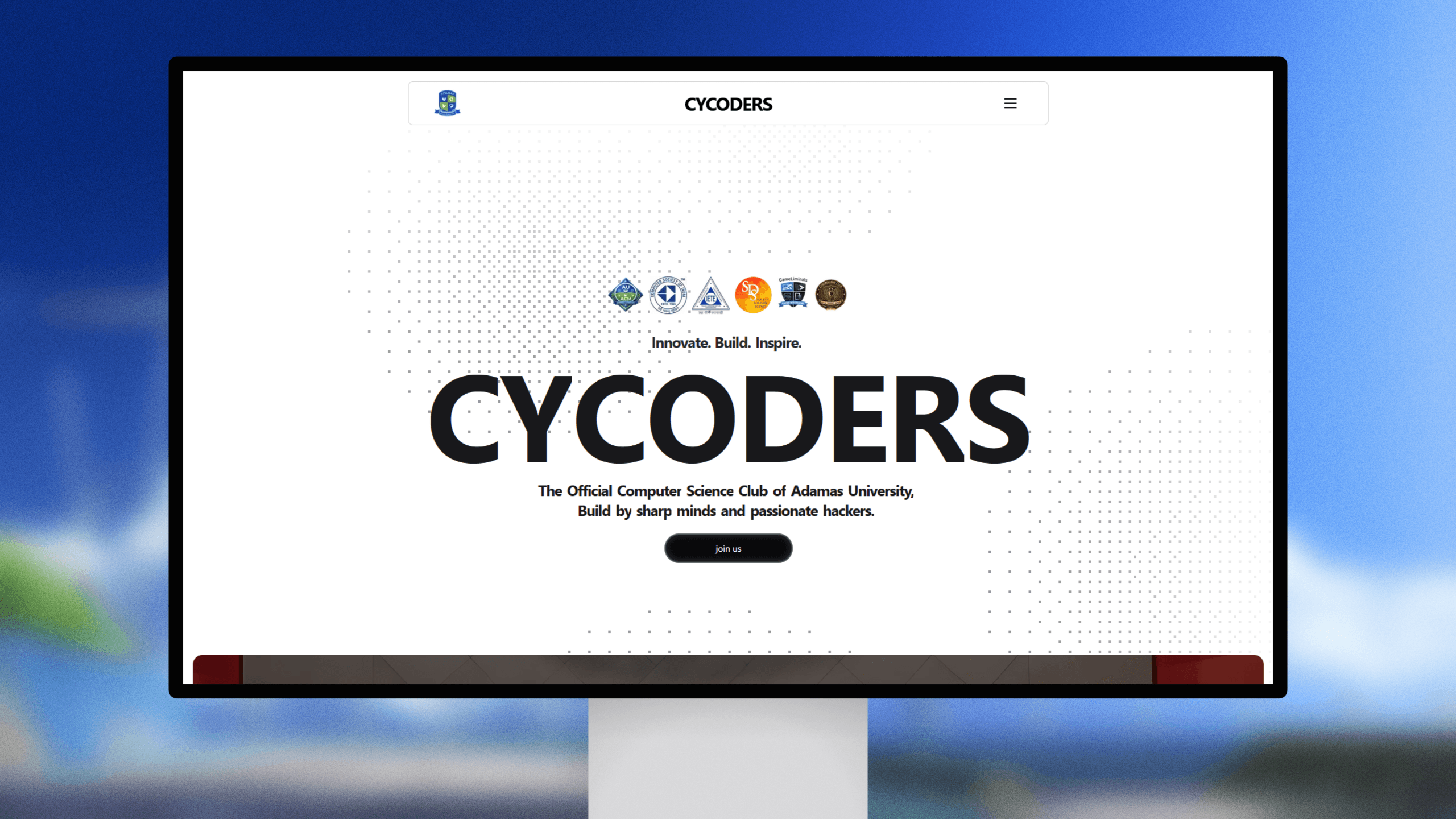
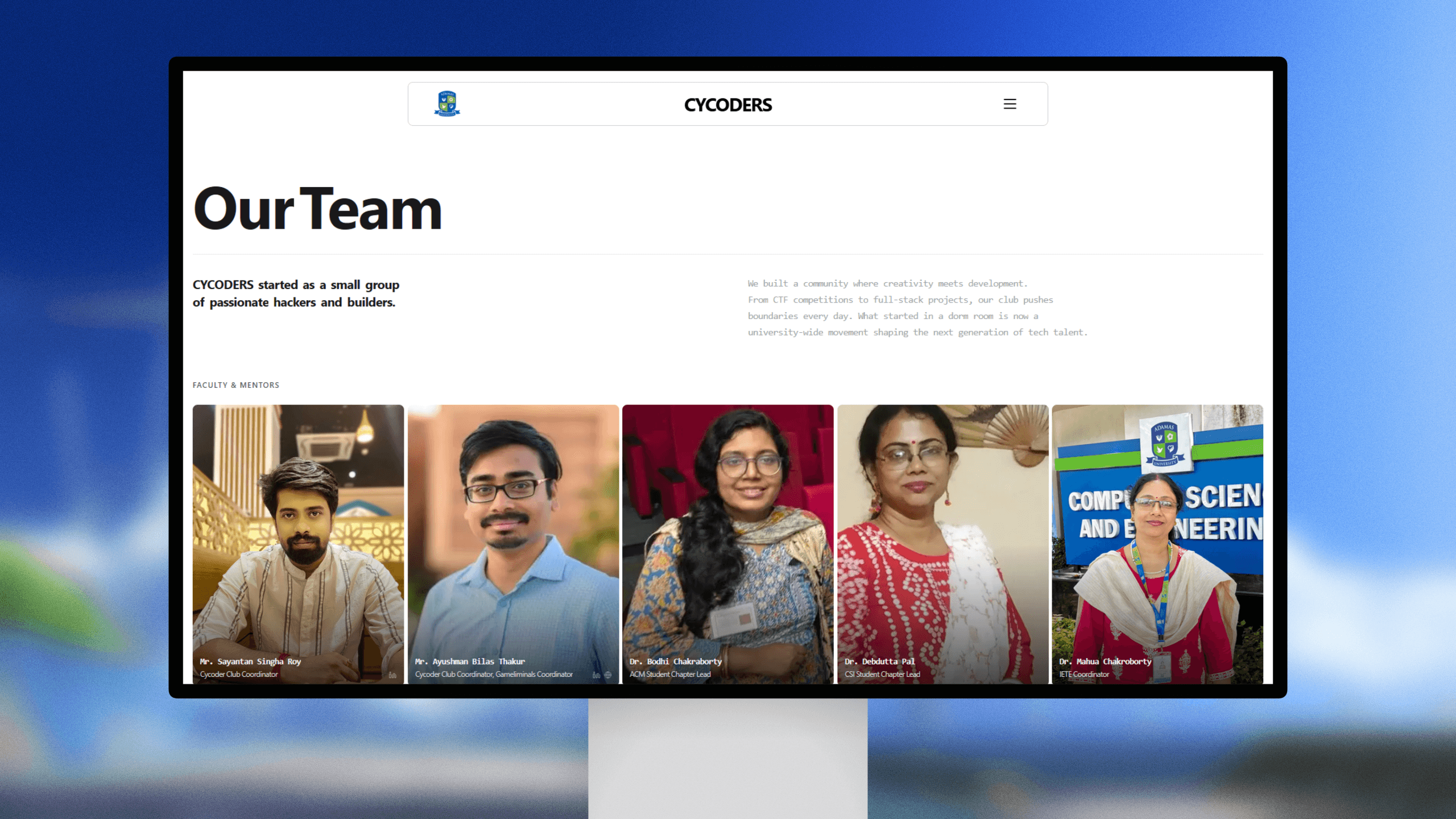
Cycoders is a centralized platform for managing a college coding club, its members, events, registrations, announcements, and administrative workflows.
overview
Cycoders was built to replace fragmented club operations that were previously handled through forms, spreadsheets, group chats, and manual coordination.
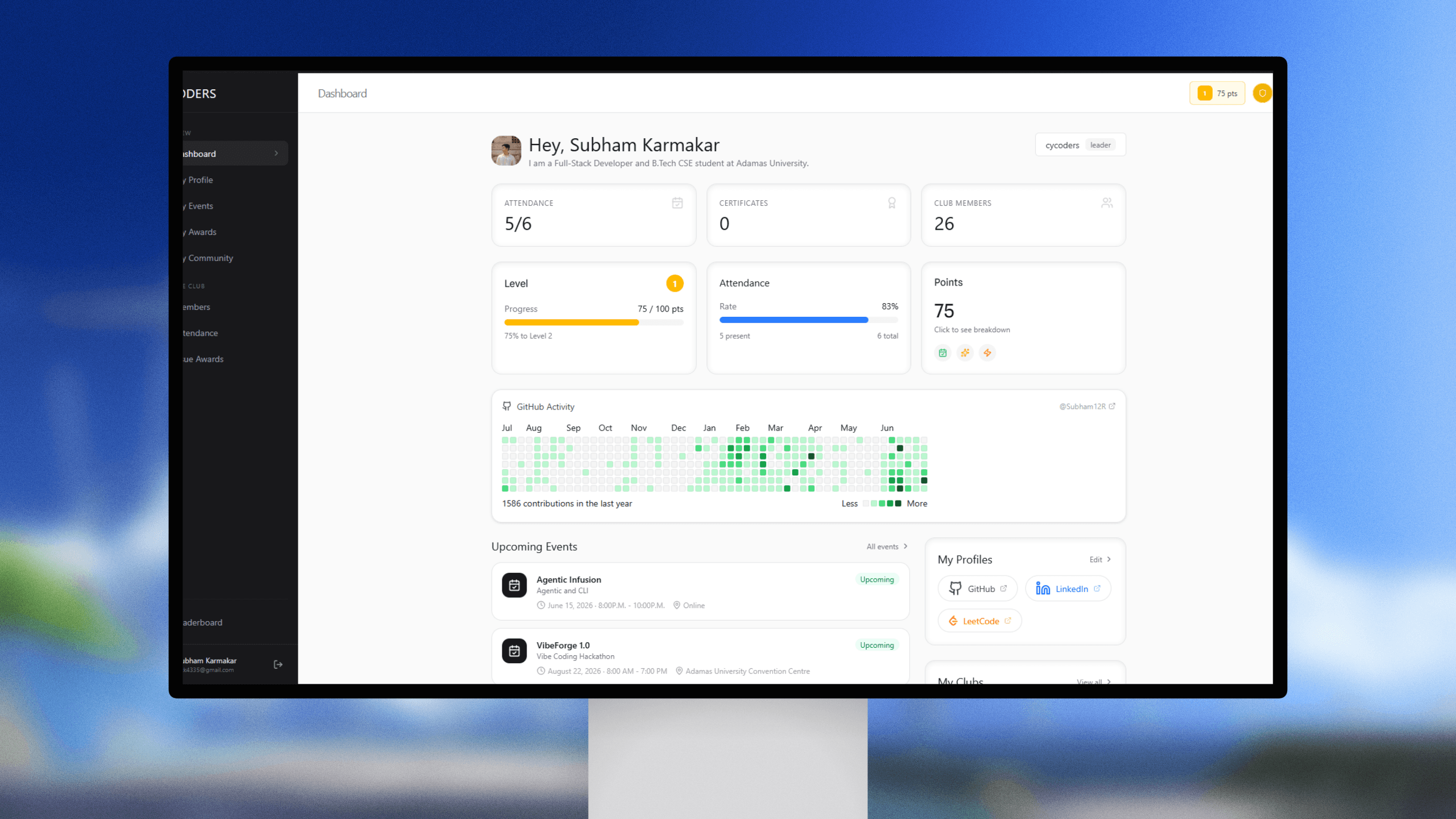
The platform provides students with a single place to discover club activities, register for events, access updates, and interact with the community. Administrators can manage events, registrations, members, announcements, and platform content through a dedicated dashboard.
The frontend is built with Next.js, while the backend uses Node.js and Express with PostgreSQL, Drizzle ORM, and Better Auth. The application is designed to support both public club content and protected administrative operations through a structured full-stack architecture.
the problem
College technical clubs often rely on multiple disconnected tools for event registrations, announcements, member records, and internal management. This creates duplicated work, inconsistent data, and a poor experience for both students and organizers.
Cycoders solves this by bringing club discovery, event registration, member management, and administrative operations into one unified platform.
highlights
- Event Discovery and Registration
- Students can explore upcoming events and register directly through the platform.
- Member Management
- Club administrators can manage member records and participation data.
- Admin Dashboard
- Authorized users can create events, review registrations, update content, and manage club operations.
- Secure Authentication
- Better Auth protects administrative routes and user-specific actions.
- Centralized Data Management
- PostgreSQL stores event, user, registration, and content data in a structured format.
- Responsive Interface
- The platform works across desktop and mobile devices.

at a glance
architecture
sequenceDiagram
    actor Student
    participant UI as Next.js Frontend
    participant API as Express API
    participant Auth as Better Auth
    participant DB as PostgreSQL
    actor Admin

    Student->>UI: Browse available events
    UI->>API: GET /events
    API->>DB: Fetch published events
    DB-->>API: Return event records
    API-->>UI: Return event list
    UI-->>Student: Display events

    Student->>UI: Register for an event
    UI->>API: POST /events/{eventId}/register
    API->>Auth: Validate user session
    Auth-->>API: Session valid
    API->>DB: Check existing registration
    DB-->>API: No duplicate found
    API->>DB: Create registration
    DB-->>API: Registration saved
    API-->>UI: Return confirmation
    UI-->>Student: Show registration success

    Admin->>UI: Open admin dashboard
    UI->>API: Request registrations
    API->>Auth: Verify admin access
    Auth-->>API: Admin authorized
    API->>DB: Fetch event registrations
    DB-->>API: Return participant records
    API-->>UI: Return registration data
UI-->>Admin: Display participant listchallenges
- 01
Managing Event Registrations
Preventing duplicate registrations and keeping participant data consistent was a key challenge.
fixI added server-side validation and database constraints before creating registrations.
- 02
Building Role-Based Access
Public users and administrators required different levels of access.
fixI used authenticated sessions and protected backend routes for administrative operations.
- 03
Keeping Frontend and Backend Data Consistent
Event and registration updates needed to appear correctly across the platform.
fixI created structured API responses and centralized the data flow through the Express backend.
learnings
- Full-Stack Architecture. I learned how to connect a Next.js frontend with a separate Express backend and PostgreSQL database.
- I gained experience protecting routes and separating public and administrative permissions.